
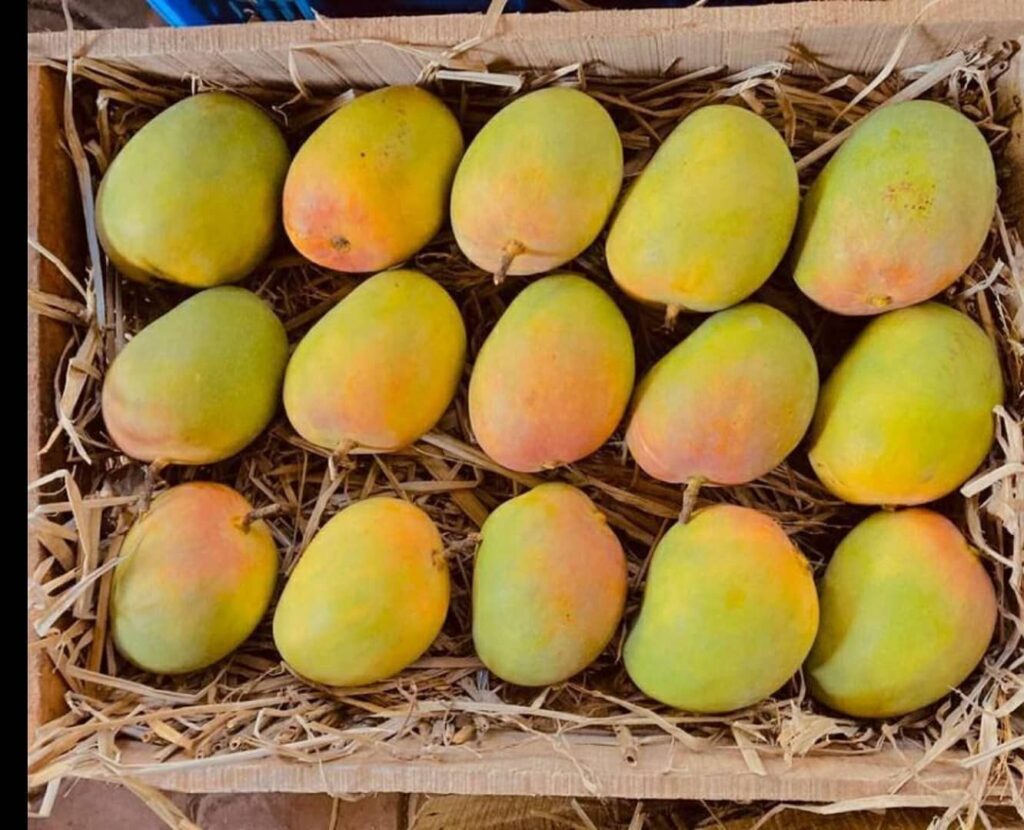
There is something distinctive about food from Konkan. It can be tangy, mildly sweet, earthy, aromatic, fresh and deeply seasonal—all in the same meal. But the character of Konkan food does not come from one ingredient or one recipe. It comes from a close relationship between the land, the sea, the monsoon, farming traditions and the people who have cooked with local ingredients for generations.
Konkan stretches along Maharashtra’s western coast, with Ratnagiri and Sindhudurg at the heart of the region. Its landscape is shaped by the Arabian Sea, heavy monsoon rainfall, red laterite soil, warm coastal conditions and small, often fragmented farms. These conditions influence what farmers grow and, in turn, what families cook and preserve at home.
For us at Regional Harvest, understanding Konkan food begins with understanding this connection between place, produce and people.
The Land Comes First
Food traditions usually make more sense when we look at the land behind them. Konkan is not a region where agriculture can be separated from the landscape. Farms are often small, terrain can be uneven, and the monsoon strongly shapes the agricultural calendar.
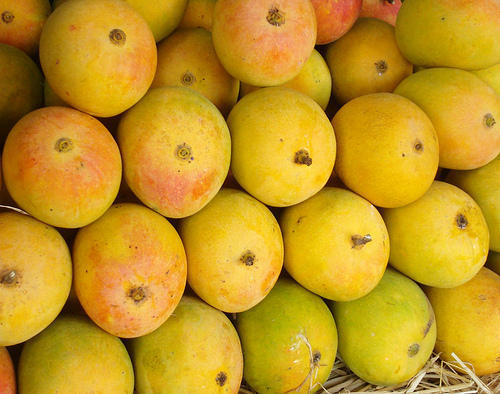
The region’s red laterite soils and coastal climate support crops that have become closely associated with Konkan. Coconut and cashew are important parts of the landscape. Mango orchards thrive in suitable pockets, with Ratnagiri becoming especially well known for Alphonso. Kokum, jackfruit and a variety of local plants and spices also have a place in the region’s food culture.
Because agriculture is closely tied to the seasons, Konkan food naturally reflects seasonality. Fresh mangoes, tender cashews, jackfruit and other produce appear when the land provides them. Other ingredients are dried, preserved, processed or stored so that their flavours can be enjoyed beyond the harvest season.
Explore the Ratnagiri Alphonso story to learn more about the fruit that has become one of Konkan’s best-known food identities.
A Cuisine Built Around Local Ingredients
One of the most interesting things about Konkan food is how many familiar ingredients can take on a completely different identity when they are used locally.
Alphonso Mango
Ratnagiri Alphonso is perhaps the region’s most famous food identity. Beyond eating ripe mangoes, Konkan households have traditionally found many ways to enjoy mango through preparations such as aamras, amba poli, pickles, preserves and other seasonal foods. Mango is not simply a fruit here; it is part of the rhythm of summer.
When fresh mango is out of season, the same regional character can continue in other forms. Our Ratnagiri Alphonso Mango Pulp is one example of how the flavour of Alphonso can be enjoyed beyond the fresh harvest.
Cashew
Konkan’s cashew is another important regional product. Cashew trees are well suited to parts of the landscape, and the crop supports many farming families. The nut is enjoyed as food, but cashew and its seasonal harvest are also part of the agricultural identity of the region.
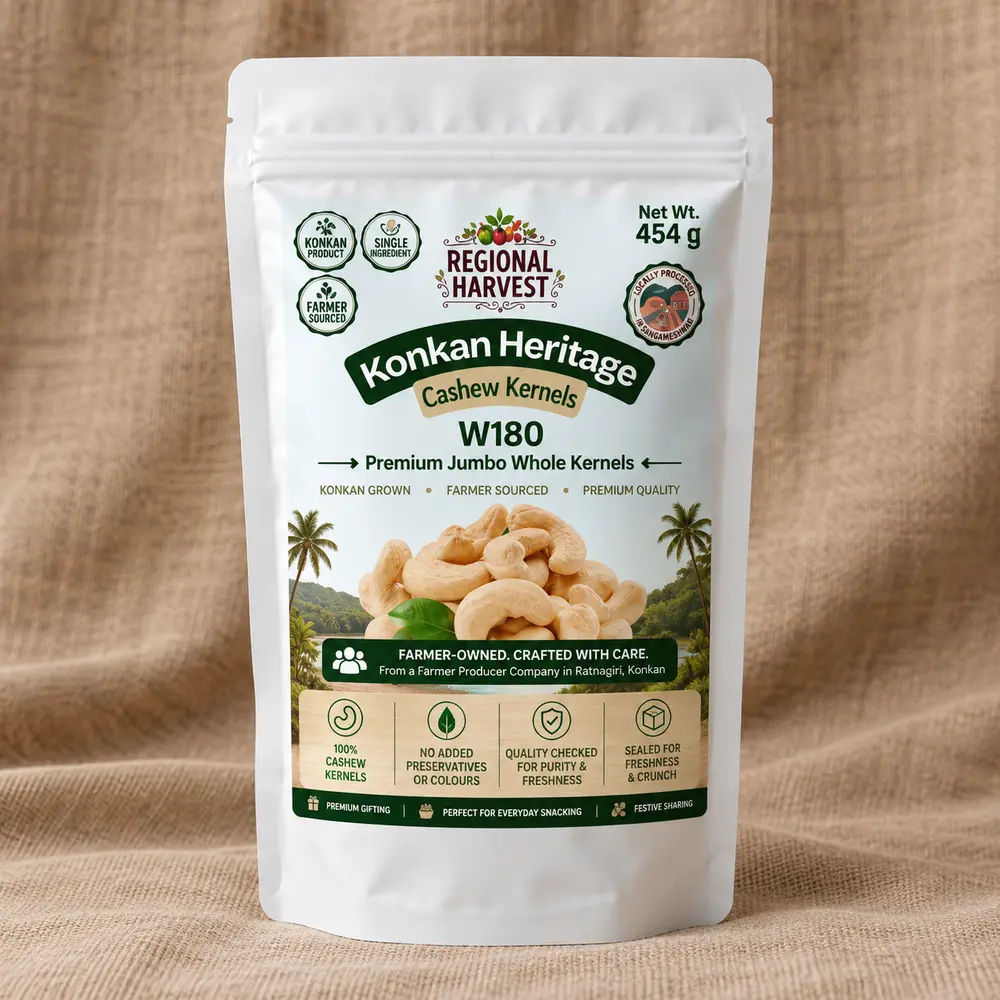
You can explore our Konkan Cashews in W180, W240 and W320 grades.
Kokum
Kokum brings a bright sourness that is difficult to replace. It appears in refreshing drinks, traditional preparations, curries and accompaniments. For many people familiar with Konkan cooking, the flavour of kokum instantly brings to mind the region itself.
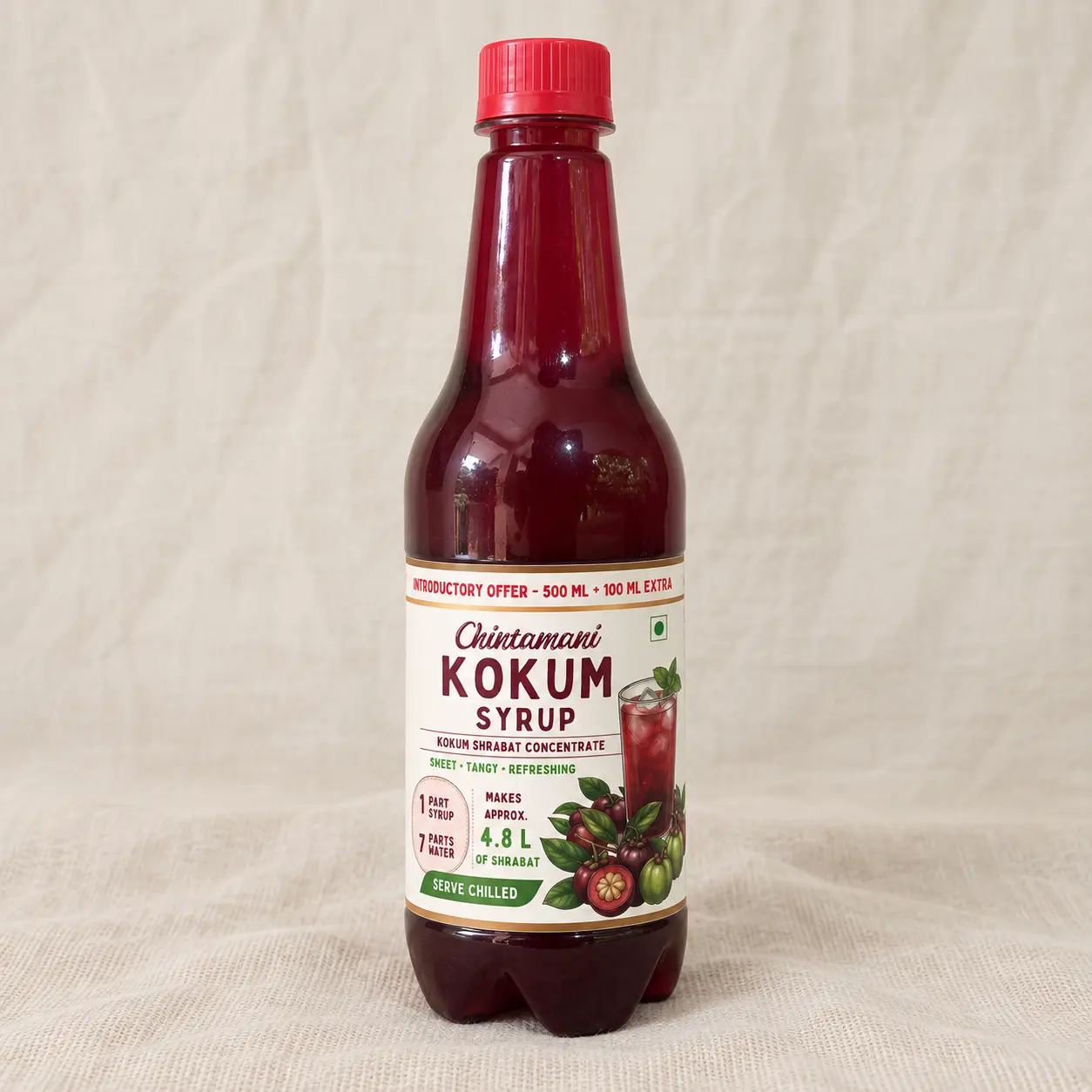
Our Konkan Kokum Syrup turns this familiar regional flavour into a convenient drink for the modern kitchen.
Coconut
Coconut is deeply woven into coastal Indian cooking, and Konkan is no exception. Coconut may be used as fresh grated coconut, milk, roasted coconut, oil or as part of masalas and sweets. Its versatility makes it one of the foundations of many traditional kitchens.

Our Wood Pressed Coconut Oil is made using a traditional wood-pressing method and is available in 200 ml and 500 ml packs.
Jackfruit and Other Seasonal Produce
Jackfruit is another example of how Konkan households have traditionally made use of seasonal abundance. The ripe fruit can be enjoyed fresh or turned into preparations such as fanas poli, while the raw fruit can be used in savoury dishes. Preserving and processing seasonal produce is an important part of keeping the harvest useful throughout the year.
Why Konkan Food Has Such a Distinctive Taste
Konkan food is often associated with a balance of sour, sweet, salty, spicy and earthy flavours. But there is no single standard Konkan recipe. Food varies from village to village and from household to household.
Some dishes may use kokum for acidity, while others may use raw mango. Coconut can add richness, while spices bring warmth and aroma. Fresh herbs, local chillies and seasonal ingredients add another layer of character.
This diversity is important. Konkan food should not be reduced to a single flavour profile or a fixed list of dishes. It is better understood as a collection of local food traditions shaped by geography, community and family practice.
Preservation Is Part of the Food Culture
In a strongly seasonal agricultural region, preservation is not just a modern convenience. It is part of traditional food knowledge.
Families have long found ways to extend the life of seasonal ingredients through drying, pickling, pulping, concentrating, fermenting and other forms of processing. Mango can be transformed into several products. Jackfruit can be dried or made into traditional preparations. Kokum can be dried or prepared as a syrup or other ingredient.
These methods allow the character of the harvest to remain available even when the original fresh crop is no longer in season. They also show how closely food traditions are connected to farming realities.
Konkan Food Is Also a Story of Farmers
It is easy to talk about regional food only in terms of ingredients and recipes. But every ingredient starts with someone growing it.
Across Konkan, many farms are relatively small and farming remains closely connected to family knowledge and seasonal work. The farmer decides what to grow, manages the crop through changing weather, harvests at the right time and deals with the practical realities of getting produce to market.
At Regional Harvest, this farmer connection is central to how we think about food. Our produce is sourced from member farmers in the Konkan region. Fresh produce is collected through village-level sourcing, where an initial quality check is carried out before the produce moves for packaging or processing.
Learn more about the people and systems behind Regional Harvest on our Farmer Support page.
Why Preserving Konkan Food Traditions Matters
Regional food traditions are more than collections of recipes. They contain knowledge about seasons, farming, ingredients, preservation and local ways of living.
Some traditional foods and ingredients are becoming less common as lifestyles change, younger generations move away from villages, and food habits become more standardized. Preserving regional food does not mean refusing change. It means recognising the value of knowledge that developed over generations and making sure that distinctive local foods do not disappear unnoticed.
When we buy authentic regional products, learn traditional recipes or simply ask where an ingredient comes from, we participate in keeping that food culture visible.
What Makes Konkan Food Special, After All?
Perhaps the simplest answer is that Konkan food carries the character of its home.
The sea, monsoon, red soil, orchards, small farms, seasonal harvests and traditional kitchens all leave their mark. Alphonso mangoes, cashews, kokum, coconut and jackfruit are not isolated products—they are parts of a wider food landscape.
That is what makes Konkan food worth discovering. It offers flavour, but it also offers a story of place, agriculture, tradition and people.
Explore More of Konkan
Want to explore more of the region? Visit our Alphonso, Cashew, Coconut and Kokum pages for more about these important parts of Konkan’s food heritage.
And when you are ready to explore Regional Harvest products, visit the Shop.
Regional Harvest — authentic flavours from the farms of Konkan.
Frequently Asked Questions
What foods is Konkan famous for?
Konkan is especially known for Ratnagiri Alphonso mangoes, cashews, kokum, coconut, jackfruit and a wide range of coastal and traditional preparations.
Why is Konkan food often sour and tangy?
Ingredients such as kokum and raw mango are commonly used to add acidity and a distinctive sourness to many traditional preparations. Local cooking varies considerably by household and area.
Is Konkan food vegetarian or non-vegetarian?
Both traditions are important. Konkan includes strong vegetarian food traditions based on grains, vegetables, coconut, fruits and spices, as well as coastal non-vegetarian cuisines that make use of locally available fish and other foods.
Why are seasonal foods important in Konkan?
Many local crops are available only during particular seasons. Traditional preservation and processing methods help households enjoy some of these ingredients for longer and reduce dependence on a short harvest window.